QA
Congratulations on passing this unit's quiz!
I hope you can share your feelings at this moment with us. Your feedback is the driving force for our continuous progress.
How satisfied are you with this course?
After watching this course, do you know more about semiconductors?
Course List
Device physics
This lesson will take you on an exploration of the mysteries deep in the core of semiconductor devices. We will begin with "What is a semiconductor?" and explore different types of extrinsic semiconductors, as well as how they form the basis of IC chip manufacturing. You will learn about "transistors," a key component of chips, and how it controls the switching of digital signals on and off. The lesson will use relatable analogies to give you firsthand experience of the nuances of transistors, and introduce you to p-n junction diodes and their applications in rectification, power generation, and light emission.
Difficulty:
Device physics
Difficulty:
Lesson length 08:00
Concept and Applications of Transistors
The core that enables chips to function is transistors. Transistors act as a digital signal switch and manage the 0101 signals. Intricate and precise designs make devices become more powerful. The course will include hands-on activities, allowing you to experience the wonder of transistors.
Device physics
Difficulty:
Lesson length 09:00
Semiconductor Fundamentals
With the existence of semiconductors in the world, they just come with conductors and insulators. The distinct characteristics of different materials are extensively applied in various fields. Semiconductor materials, under specific conditions, can exhibit designated functionalities. Engineers leverage these varied characteristics to develop chips with enhanced performance.
Device physics
Difficulty:
Lesson length 06:21
Unlocking the World of Semiconductors
  • What is a semiconductor?
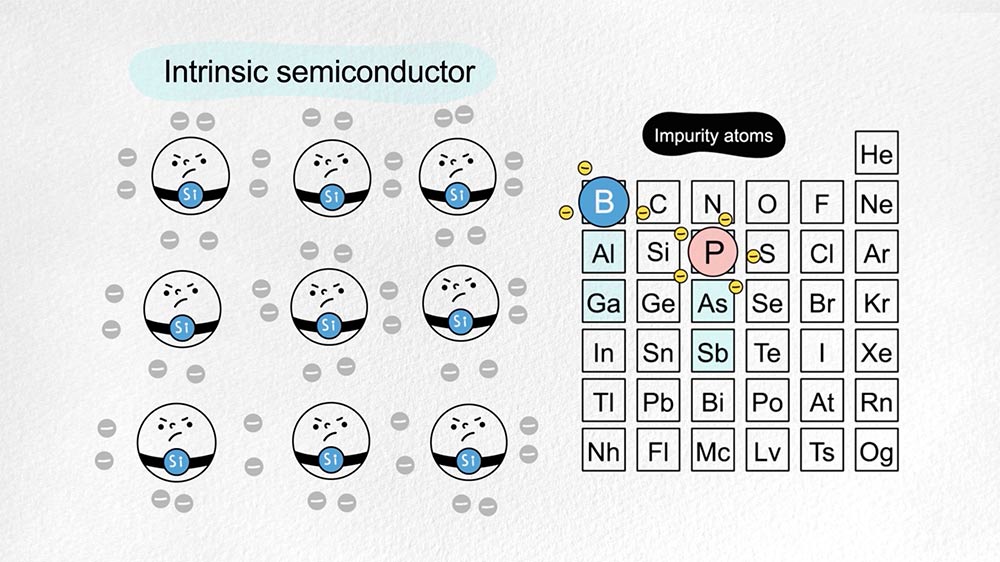
  • Different conduction types of semiconductors (n-type and p-type)
  • Manufacturing process of "integrated circuits" (IC ships)
Device physics
Difficulty:
Lesson length 07:05
The Sparks of p-n Junctions (Part 1.)
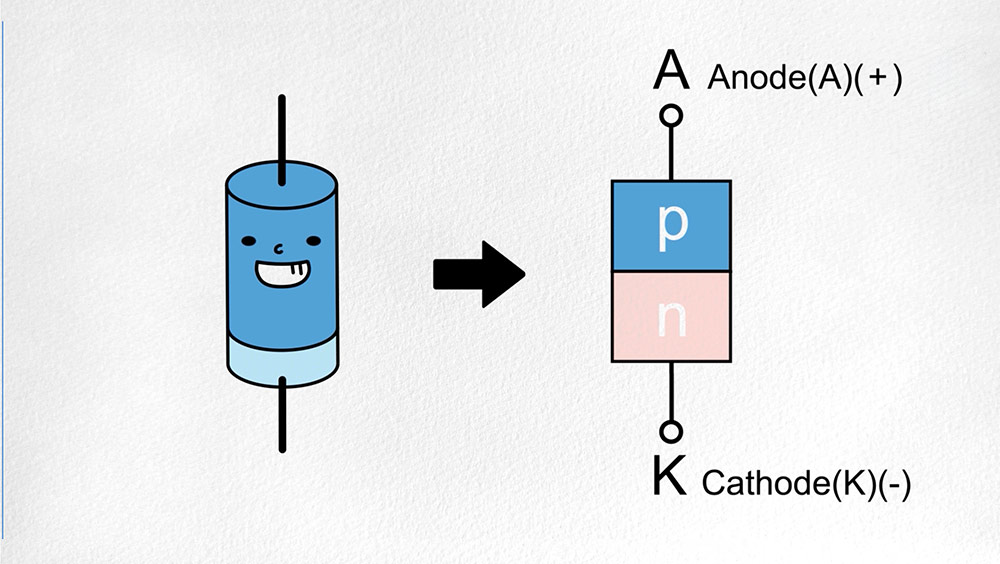
  • What is a p-n junction diode?
  • Three electrical properties of a p-n junction diode
Device physics
Difficulty:
Lesson length 06:19
The Sparks of p-n Junctions (Part 2.)
  • Electrical characteristics of p-n junction diodes (I-V characteristics)
  • Applications of p-n junction diodes (rectification, power generation, and light emission)
Device physics
Difficulty:
Lesson length 07:57
Illuminating Transistor Technology (Part 1.)
  • Classification of transistors
  • Structure and switching characteristics of BJTs
  • Signal amplification characteristics of BJTs
Device physics
Difficulty:
Lesson length 07:29
Illuminating Transistor Technology (Part 2.)
  • Structure of MOSFETs
  • Conduction and cutoff of MOSFETs
  • Threshold voltage of MOSFETs
  • Complementary CMOS inverter